
Difference b/w Table Salt, Rock Salt, Sea Salt & Black Salt All About Salt Everyday Life

Nutritionally and chemically, rock salt and sea salt are basically the same! The difference is how the salt is gathered. Rock salt is simply salt from the ocean that has already formed a rock. Whereas sea salt is salt from the ocean after the water evaporates. Both rock salt and sea salt are usually sold in a more coarse grain, compared to.
What Is Rock Salt? Uses and Substitutes Salt Library Koyuncu Salt
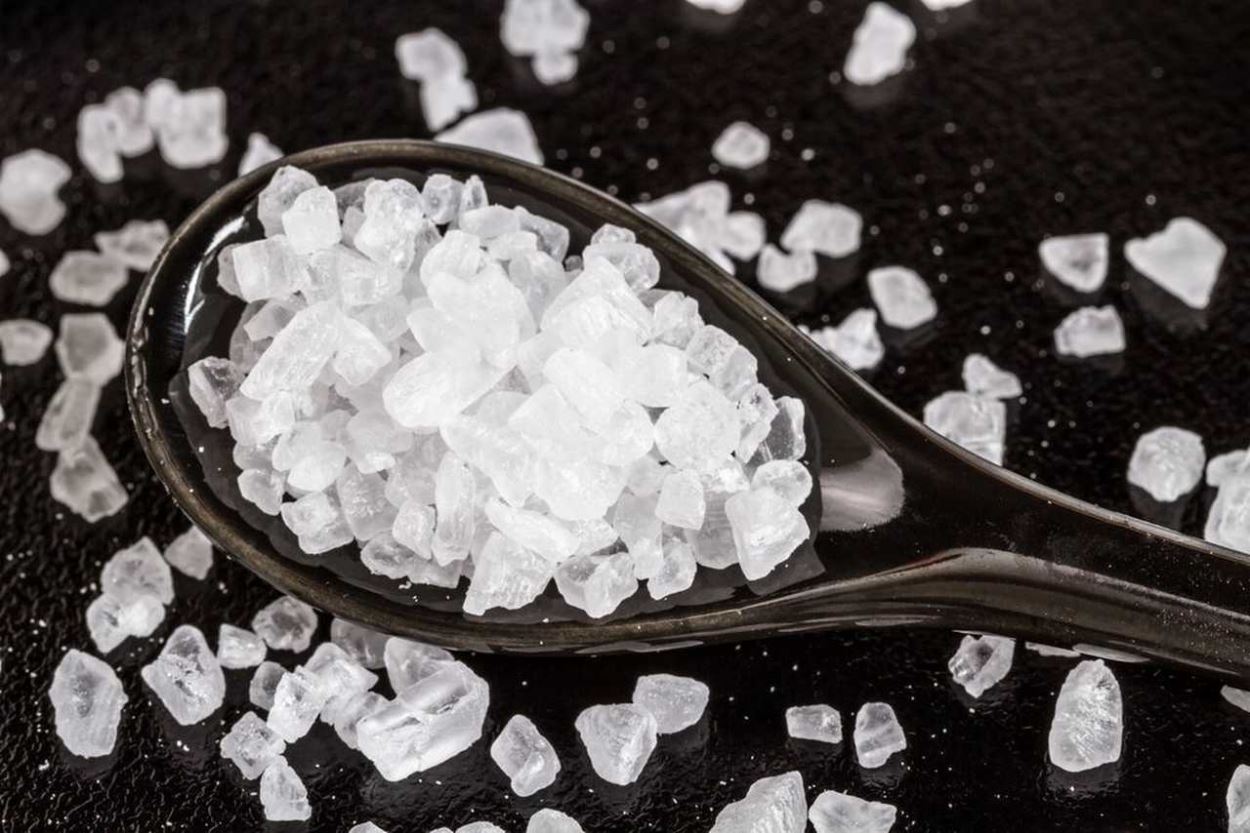
The Bottom Line. The main differences between sea salt and rock salts are in their taste, texture, and processing. There is no significant difference in nutritional benefits between salts, so choose your salt based on whichever one you enjoy the most. Tell us in the comments which salt is the one you use the most in the kitchen!
rock salt vs sea salt

"Salt is sodium chloride, and Himalayan salt, pink salt, rock salt or sea salt, all of these are also sodium chloride," says Dr. Fernandes. Salt comes in a variety of colors. The American Heart Association recommends healthy adults consume no more than 2,300 milligrams of sodium chloride per day. That is the equivalent of about one teaspoon of.
What Is Rock Salt? Uses and Substitutes Salt Library Koyuncu Salt
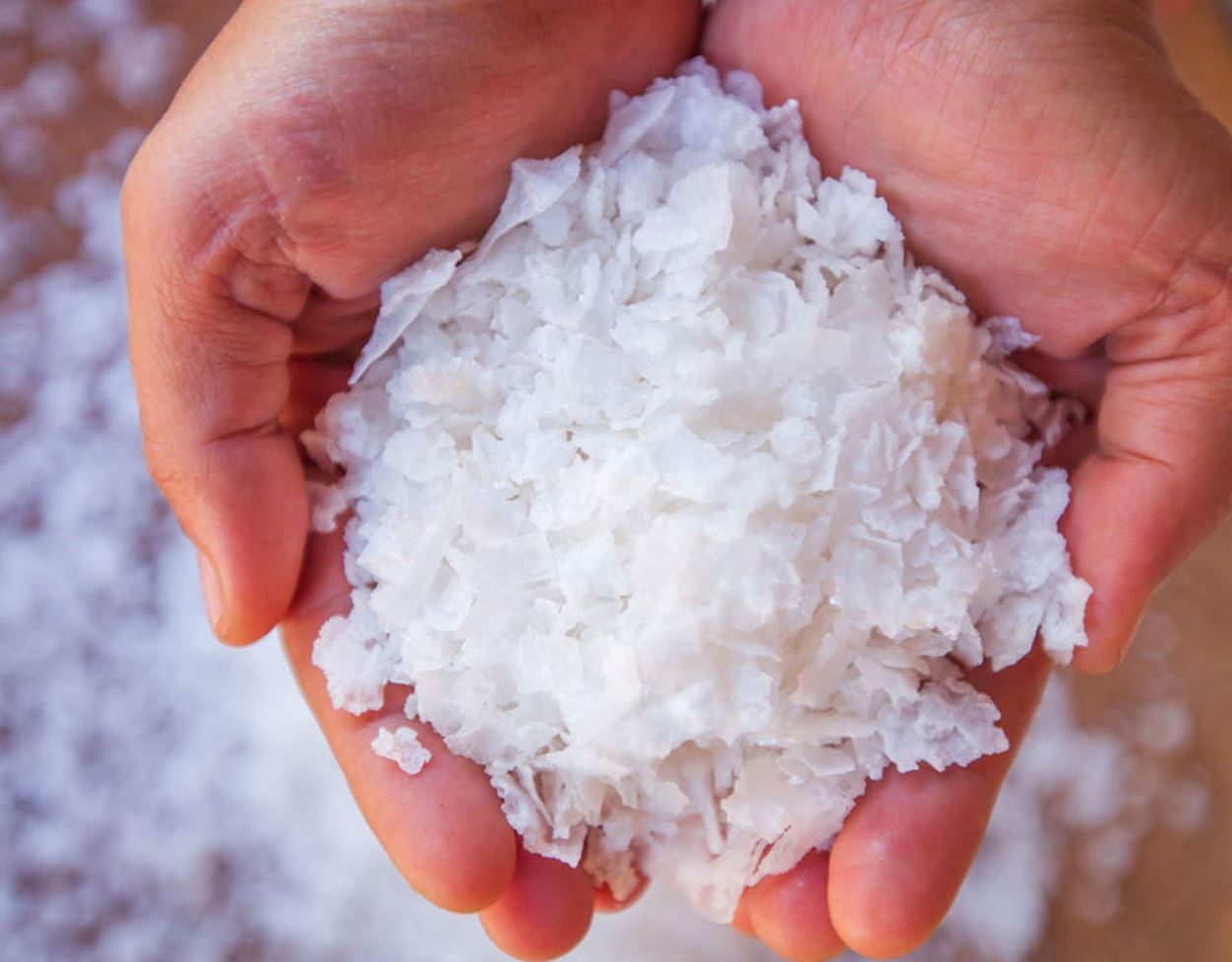
Table salt and most sea salts both contain 40% sodium by weight. A teaspoon of table salt has 2,300 milligrams (mg) of sodium. The crystals of sea salt are larger, so fewer crystals can fit in 1.
Rock Salt vs Sea Salt

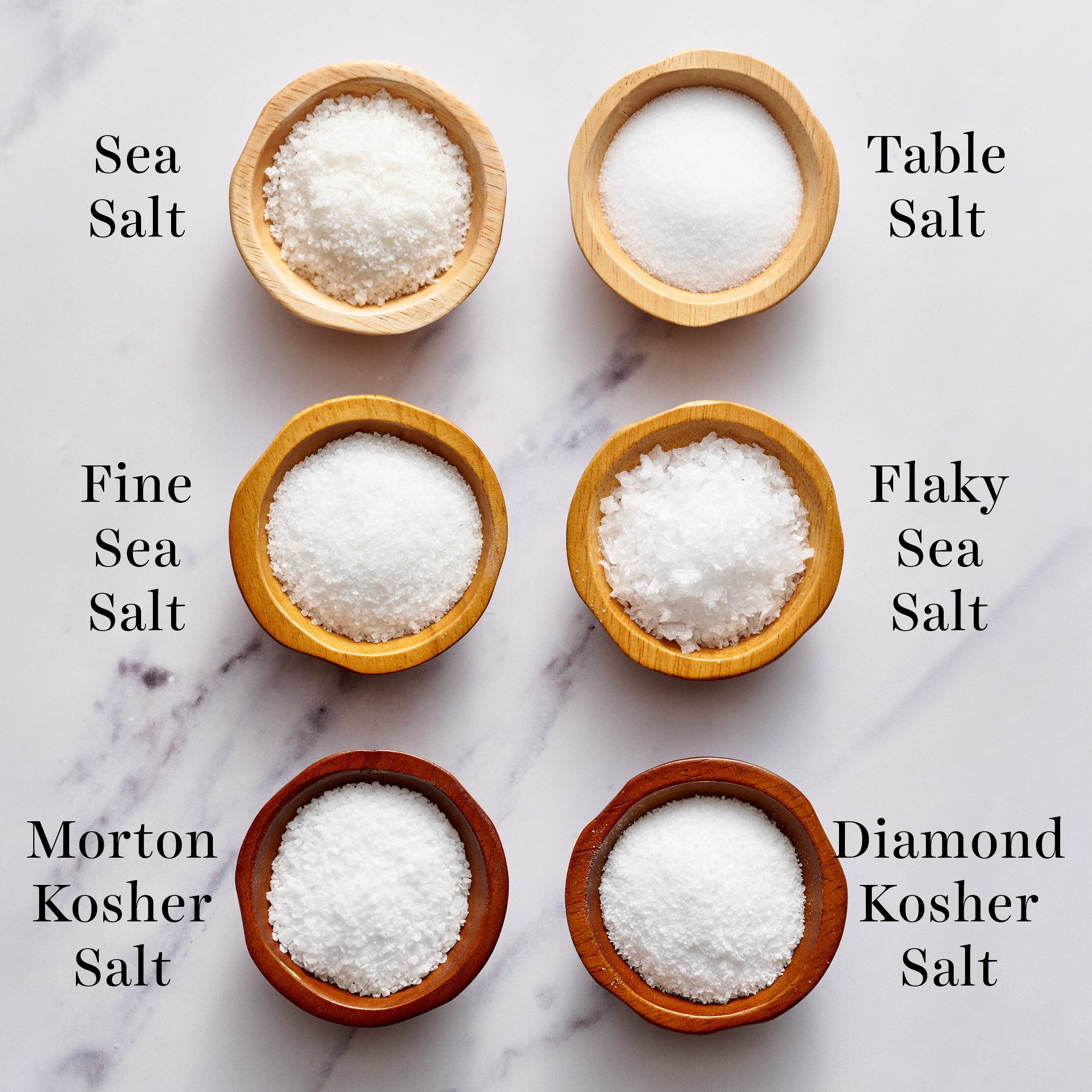
The main differences between sea salt and table salt are in their taste, texture and processing. Table salt is the granulated white salt seen in most saltshakers. Table salt is typically mined from underground deposits. It's processed to remove other minerals. Table salt is commonly fortified with iodine, which is important for thyroid health.
Kosher Salt vs Regular Salt What's The Difference?
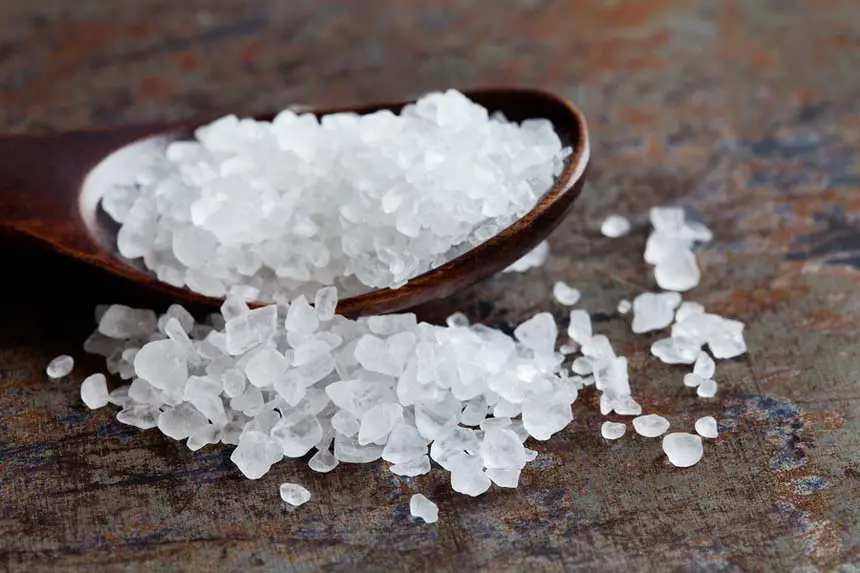
If you're switching over to kosher salt from table salt, note that there's less salt in each pinch of kosher salt due to the shape of its granules. Major kosher salt brands include Diamond Crystal ($0.17 per ounce) and Morton ($0.13 per ounce). Artisanal brands like SaltWorks ($1.90 per ounce) delve into the category as well.
Salt vs Sea Salt Why you need to make this switch.

Yes, rock salt; not sea salt. There is a difference. Sea salt is made by drying out sea water. So, the cheap rock salt sold in markets comes from the underground salt mines. The more expensive sea salt that we find in gourmet shops comes from the sea. Chemically, there's not much difference as they are both more than 99% sodium chloride.
20+ Differences between Rock Salt and Sea Salt (Explained)
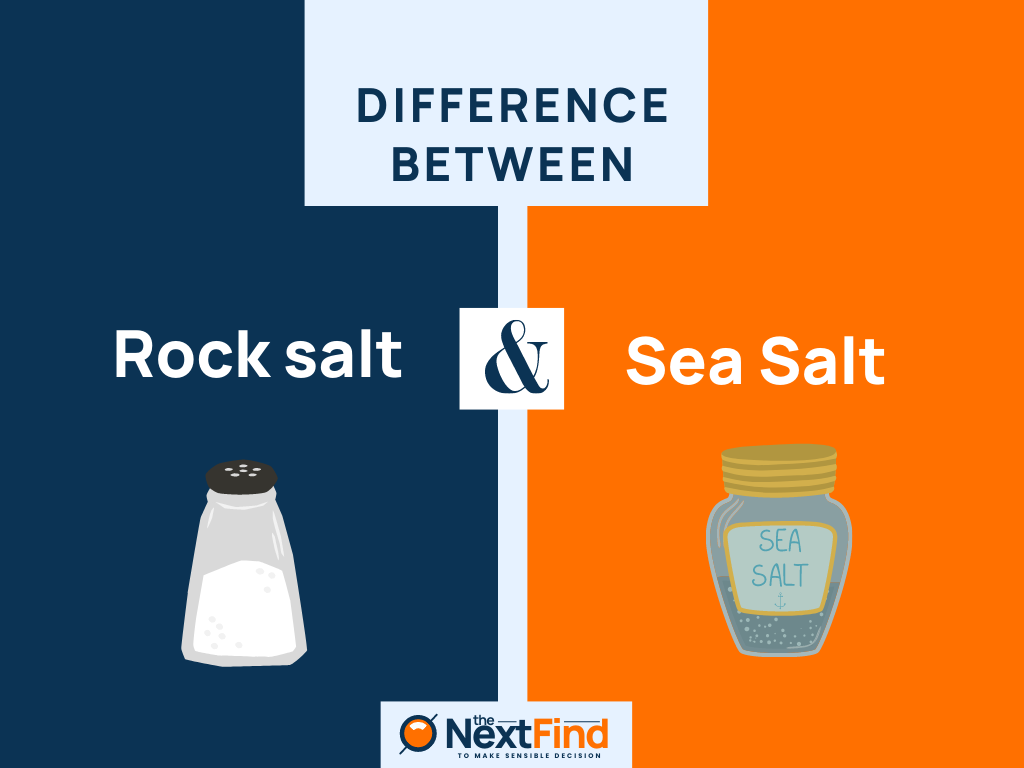
The most obvious difference between the two is that rock salt consists of larger grains than table salt, which is usually finely ground. The results in some limitations in how it can be used and some benefits as well. Another issue is the matter of additives. While table salt consists almost entirely of sodium chloride, there are other components.
Course Rock Salt Antonia's Botanicals

Sea salt, on the other hand, is finer, but tends to be more versatile than rock salt. It can be used for the same kitchen applications and techniques as rock salt, but it might be a little less even due to the smaller size of the salt. Sea salt is also expensive, so using a lot of it to make a dish is usually fairly cost-prohibitive.
Pin on Natural Health

The answer is no - there are distinct differences between the two types of salt. Rock salt is mined from underground salt deposits and is typically found in large, solid crystals. Sea salt, on the other hand, is obtained through the evaporation of seawater. This process leaves behind salt crystals that are usually smaller and more irregularly.
Rock Salt Vs. Sea Salt Fuss Free Flavours

Conclusion. In conclusion, **sea salt and rock salt are not the same**. They differ in their origins, processing methods, mineral contents, and sometimes in taste and texture. However, for everyday cooking, they can generally be used interchangeably. The choice between sea salt and rock salt ultimately depends on personal preference and the.
Rock Salt vs Sea Salt

Rock salt is mined from the earth's surface, while sea salt is extracted from the ocean. Rock salt has larger particles and is often used in cooking for adding flavor to meats or seasoning popcorn. On the other hand, sea salt is fine-grained and can be used as a finishing touch on salads or desserts.
Rock Salt Vs. Table Salt SPICEography Showdown

Rock salt is mined in its solid form, whereas sea salt is produced by evaporating seawater. In the production of table salt, the rock salt is processed and many impurities are removed. The process often removes minerals such as calcium and potassium, and adds other substances (known as anti-caking agents) to prevent clumping.
Kosher Salt To Table Conversion Elcho Table
San Francisco Salt Co. Black salt. There are three types of salt commonly called "black salt.". The first refers to a combination of sea salt and volcanic clay or activated charcoal, sometimes.
rock salt vs sea salt
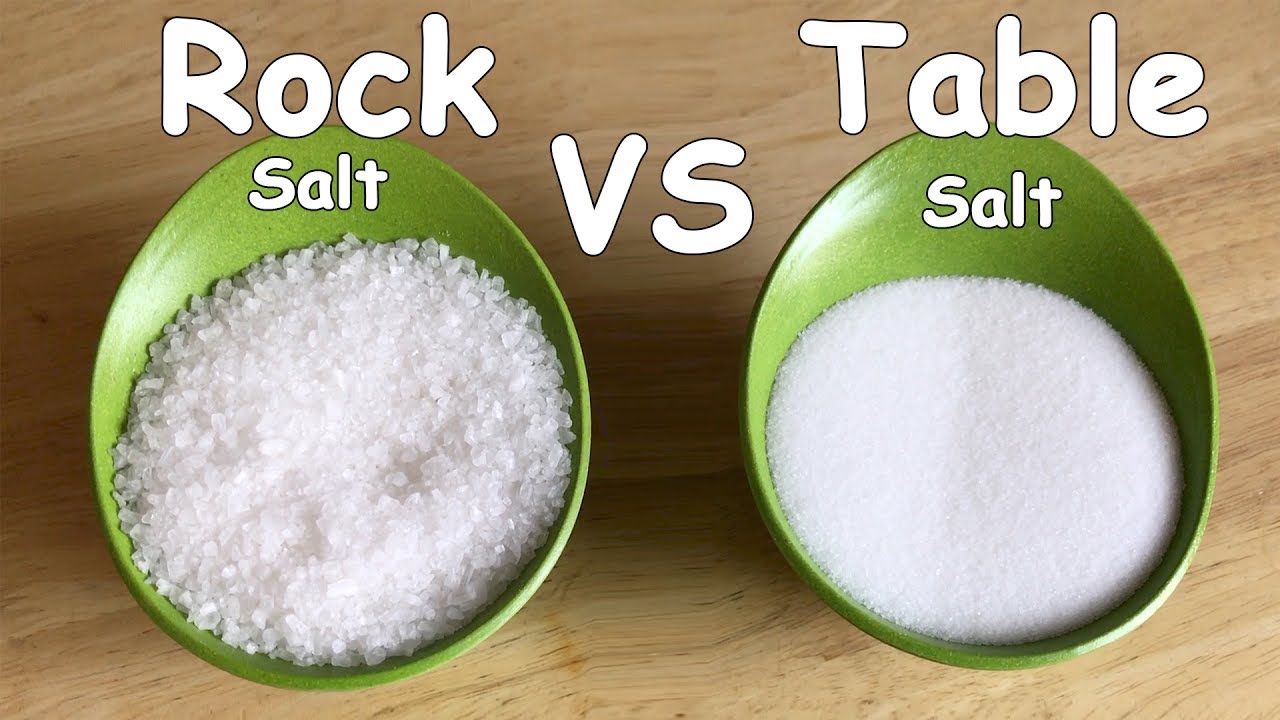
That said, sea salt is much more expensive than rock salt. Using sea salt in the same way that rock salt is used will be cost-prohibitive in most cases. When should you use rock salt and when should you use sea salt? Rock salt is best for applications where the size of the grains will be beneficial. When making ice cream, rock salt is added to.
Rock Salt vs Sea Salt

Sea salt is derived from the evaporation of seawater, while rock salt is mined from underground salt deposits. They also differ in texture, taste, and mineral content. Sea salt usually has a coarse texture and a slightly briny flavor, while rock salt is coarser and has a more intense salty taste.