
How Many Legs Do Ants Have?

show/hide words to know. Ants undergo complete metamorphosis, passing through a sequence of four stages: egg, larva, pupa, and adult. An ant's life begins as an egg. Ant eggs are soft, oval, and tiny - about the size of a period at the end of a sentence. Not all eggs are destined to become adults - some are eaten by nestmates for extra.
How Many Legs Does An Ant Have? (And Other Interesting Ant Facts)

Ants are eusocial insects of the family Formicidae and, along with the related wasps and bees, belong to the order Hymenoptera.Ants evolved from vespoid wasp ancestors in the Cretaceous period. More than 13,800 of an estimated total of 22,000 species have been classified. They are easily identified by their geniculate (elbowed) antennae and the distinctive node-like structure that forms their.
How Many Legs Do Ants Have? (Ants Body Structure)
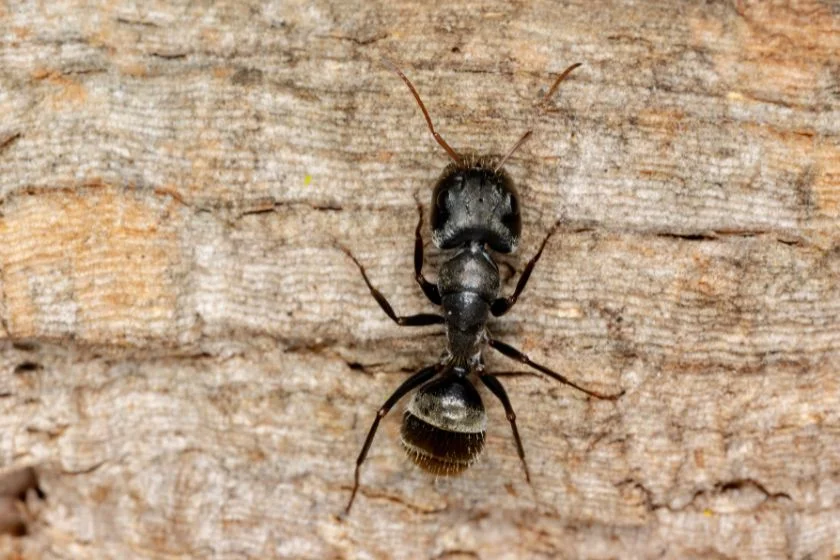
The ant's second body segment, the mesosoma, is packed full with muscles that power its three pairs of legs. The legs are designed for running - ants can run very fast for their size. At the end of each leg is a hooked claw that is used to climb and hang on to things. The gaster contains the ant's heart, digestive system, and chemical.
Ant Identification Guide How To Identify Ants

An industrious creature, despite possessing a small body frame and being one of the tiniest animals on the planet, the ant has an astounding work rate and body structure. The ant has six legs, three on each side of its body, with which it carries out the rigors of surviving life in its habitat. The extent to which ants work and how their social.
How Many Legs Does An Ant Have? (And Other Interesting Ant Facts)

An ant, like all insects, has six legs. This is the same for all ant species, from the common black ant to the fearsome bullet ant. Whether an ant is a worker, a queen, or a drone, it will have six legs, all of which are attached to the thorax, the middle section of an ant's three-part body. On this page, you'll find out more about an ant's.
How Many Legs Does An Ant Have? (And Other Interesting Ant Facts)

Spiders boast eight legs, making them arachnids, while ants, being insects, strut around on six. Besides the number, spider legs are more extended and agile, while ant legs are more robust, aiding in digging and building. Just imagine, two different blueprints by Mother Nature for such tiny creatures!
How Many Legs Does An Ant Have? (And Other Interesting Ant Facts)

The ant's body consists of a cylindrical thorax and abdomen. Ants have six legs attached to the ant's three sections, known as tagma [2]: the prothorax. mesothorax (mid-body) and metathorax (hind-body) The ant has an exoskeleton made from chitin, which supports its muscles and organs, including wings located on its back.
Ant Body Parts
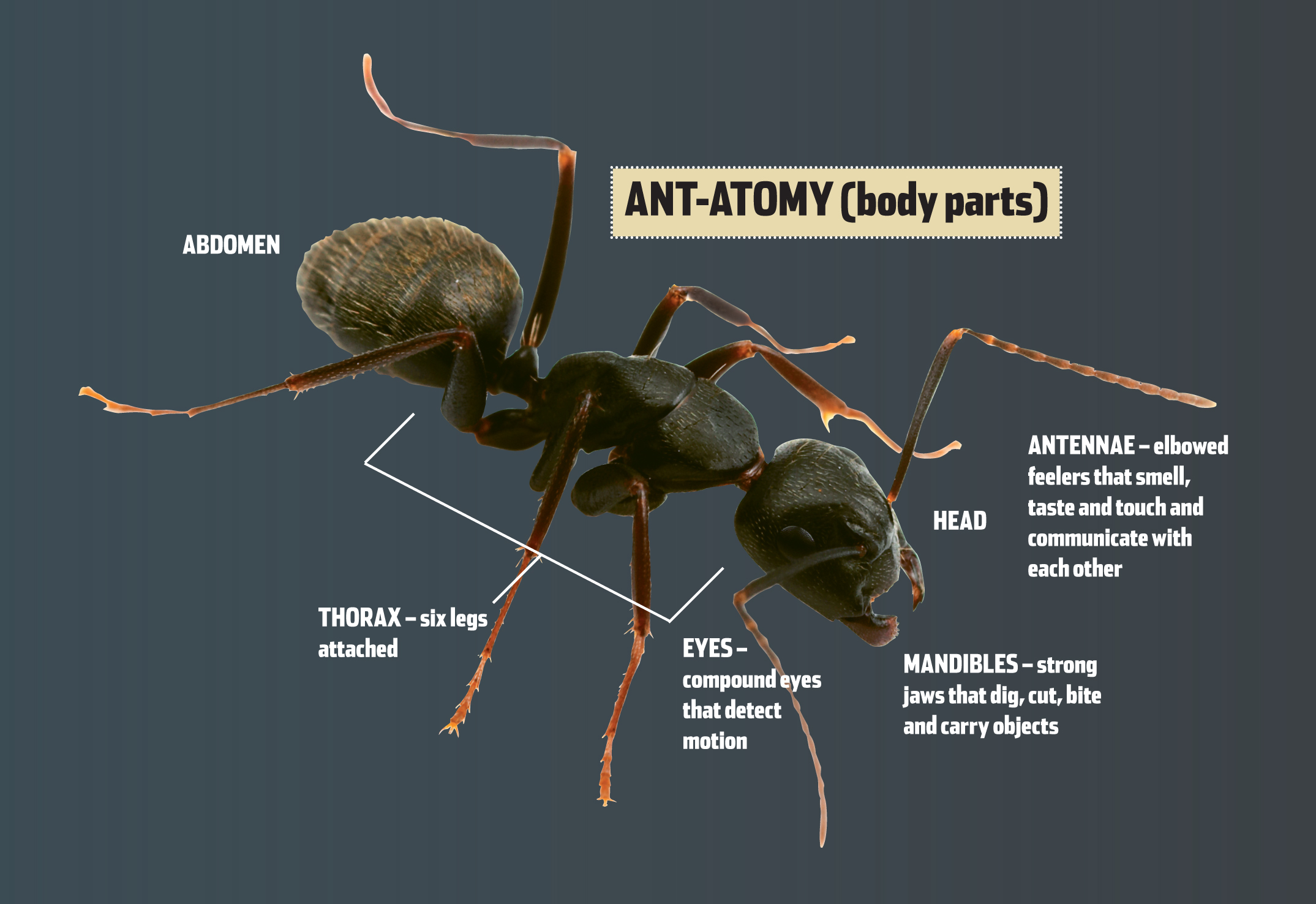
The thorax, or midsection, of an ant serves as the attachment point for its legs and, in some cases, wings. Legs. Ants have six legs, each with several segments and joints for increased mobility. Legs are equipped with tiny claws at the end, allowing ants to grip surfaces and climb with ease. Wings
Kindergarten and First Grade Ants
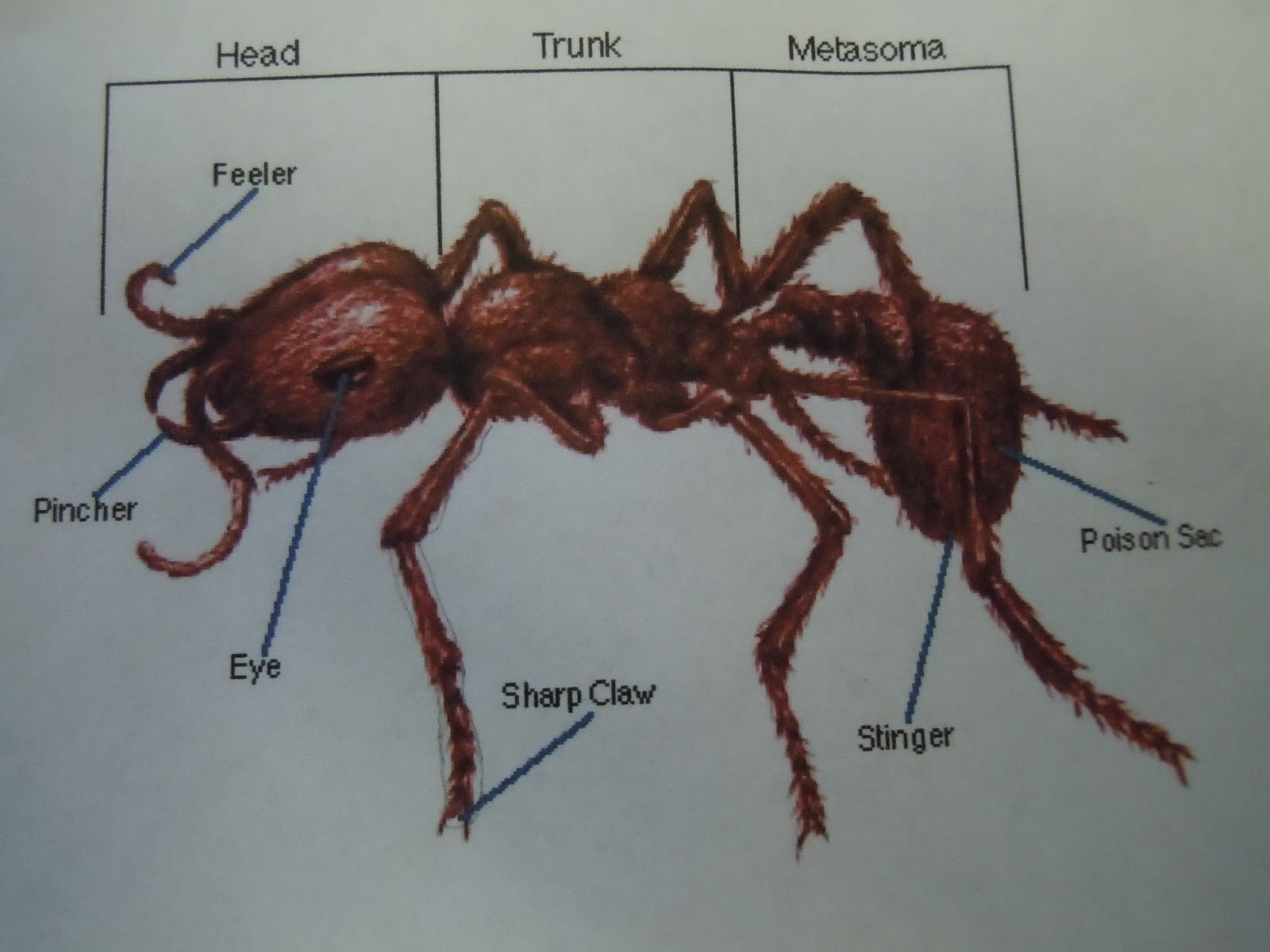
And, of course, ants have strong, sharp mandibles that they use to cut leaves, hunt, and defend their territory. All ants have six legs. This is a common characteristic of all insects, as they have a body divided into three sections: head, thorax, and abdomen. Each section has a pair of legs, which means ants have three pairs of articulated legs.
How Many Legs Do Ants Have? Learn About Nature
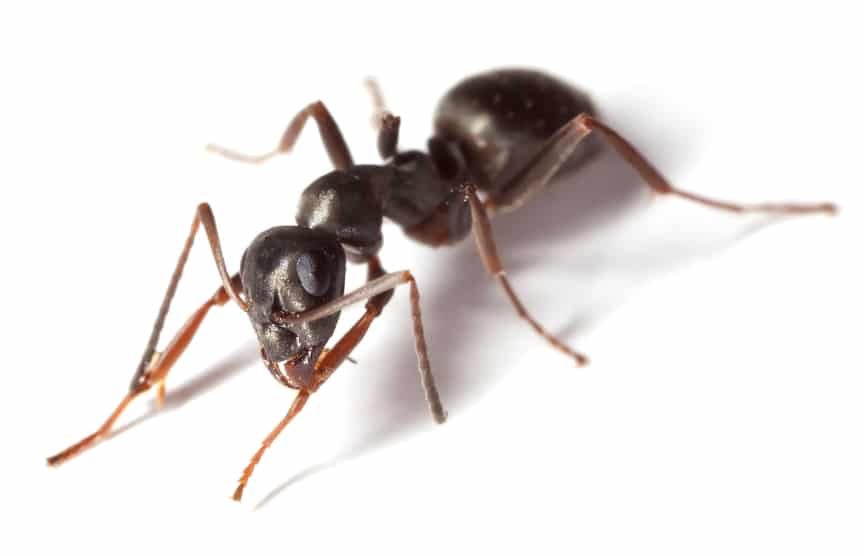
Like all insects, ants have six legs. Each leg has three joints. The legs of the ant are very strong so they can run very quickly. If a man could run as fast for his size as an ant can, he could run as fast as a racehorse. Three main areas of an ants body. Most insects have three parts to their body and ants are no exception.
How Many Legs Does an Ant Have? Ant Leg Anatomy

How many legs do ants have? Like most living things that move around, ants also have dedicated body parts that help in the process of locomotion. These are legs that are present in multiple pairs. An ant has three pairs of legs, meaning six legs in total. Two front legs, two in the middle, and two in the back on each side of these creatures.
How Many Legs Do Ants Have?
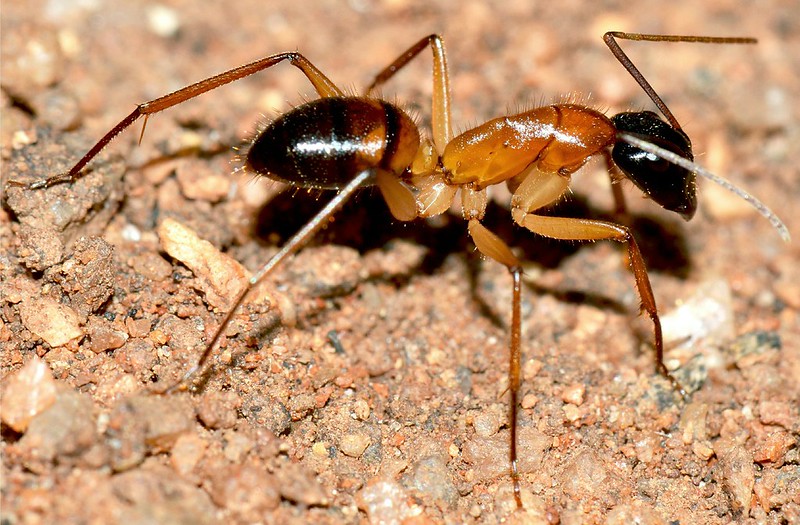
Ants have six legs that they use for locomotion, but those same legs can also be used to build complex structures. Ants essentially use their legs and mandibles to build their nests, hold onto each other, and grip surfaces. The combination of these two features allows them to construct their nests quickly and efficiently.
How Many Legs Does An Ant Have? (And Other Interesting Ant Facts)

To summarize, ants have six legs attached to their thorax. These legs are called differently based on the segment of the thorax they're connected on. Legs connected to the prothorax are called the forelegs, midlegs for the mesothorax, and finally the hind legs to the metathorax. Ants use these legs for a variety of purposes, from the most.
How many legs does an ant have?

The Physical Structure of Ants. Ants, like all insects, have three main body parts: the head, the thorax, and the abdomen. But what makes them stand out? You've guessed it: their legs! An In-depth Look at Ant Legs Ant Leg Anatomy. So, how many legs does an ant have? Like all insects, ants have six legs.
What to Know About an Ant's Life Cycle The Family Handyman

10 Fascinating Facts about Ant Legs. 1. Ants Have Six Legs. Whether an ant is a laborer, a queen, or a male, it will always have precisely six legs. ©Bradley Rentz, CC BY-SA 4.0 - License. Ants, like all insects, have six legs; this is true for all ant species, from the tiny pharaoh ant to the giant bullet ant.
Ant anatomical structure vector illustration Vector illustration, Illustration, Anatomy

In general, ants have six legs, which is the typical leg count for insects. However, there are some exceptions among ant species, with some having more or fewer legs than six. The leg count in ants, as with other insects, is determined by their genetics. Essentially, the number of legs is determined by the expression of specific genes.